New Army Data Operation Center will be ‘9-1-1’ for moving info around the globe
The new center, to be established in coming weeks, is the latest in the Army's war against inefficient sharing and poor "data management."
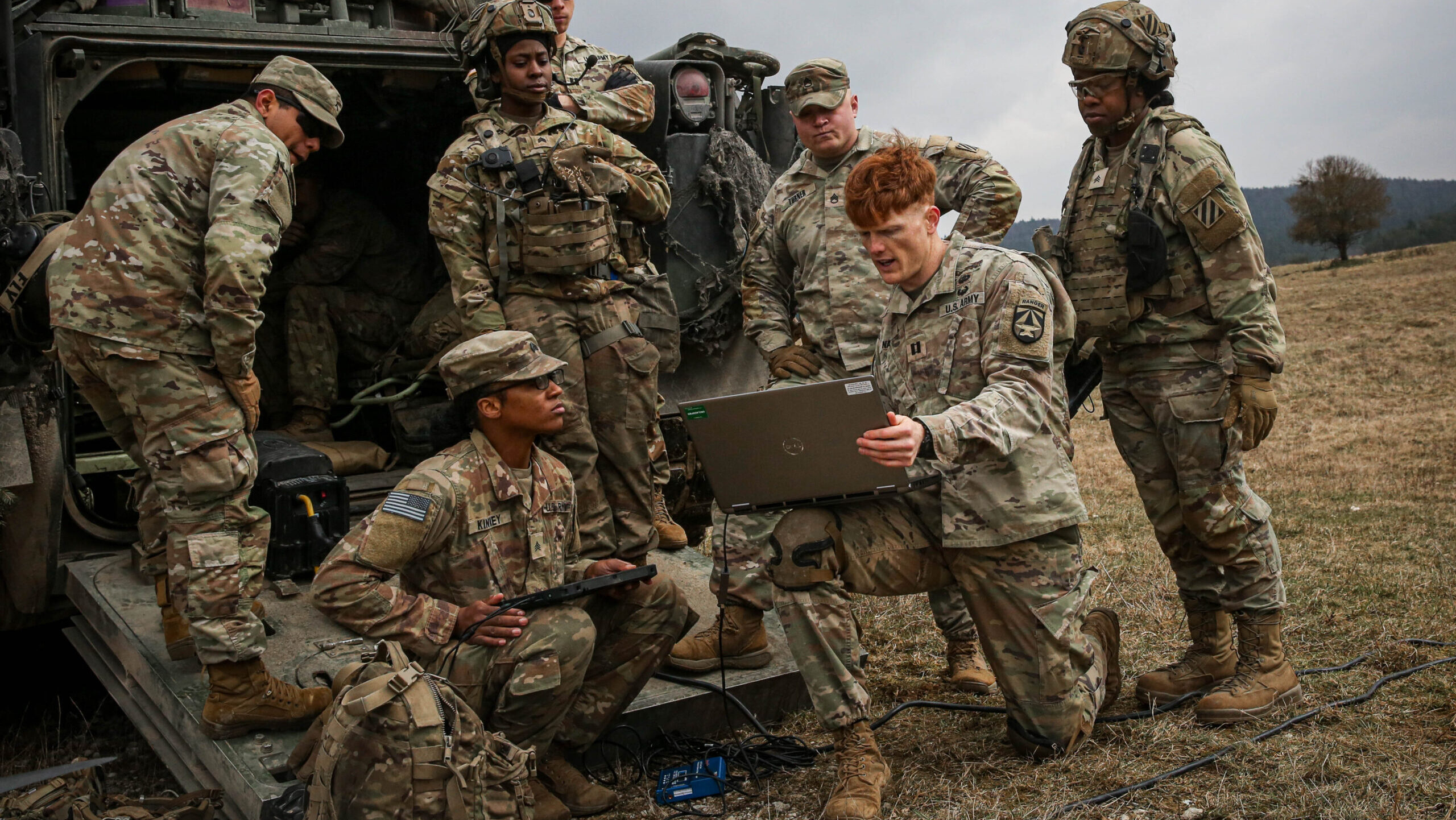
"We spent the last week training the AI models to recognize what we would call hulks out in the impact area — old vehicles that we shoot at ...," said Maj. Gen. Patrick Ellis, commander of 4th Infantry Division.
Government can’t stop to update systems, so modernization has to happen without interruptions.
Lt. Gen. Jeth Rey said the formations could "oversee that exchange of data, not only within the Army, but all of the joint services and our coalition partners."
“The very fact of collocating the data in the same instance, or within the same environment or infrastructure, is very, very helpful," Manfred Boudreaux-Dehmer, NATO's CIO, said.
Instead of demanding an exhaustive “AI Bill of Materials.” the Army will only ask contractors for a “baseball card” of key stats on their AI — while building up its in-house capacity to check for bad code or “poisoned” data.
The service’s new policy empowers “mission area data officers” for warfighting, intelligence, business operations, and enterprise IT, as well as institutionalizing what have been “ad hoc” data duties across the service, David Markowitz told Breaking Defense.
The service is also currently developing a risk management framework for Project Linchpin, the Army’s first program of record to help build out a trusted artificial intelligence/machine learning pipeline, according to Jen Swanson, deputy assistant secretary of the Army for data, engineering and software.
The Army first put out guidance two years ago on the idea of creating “data stewards” for its commands who would act as “kind of our spokesman for our supply side,” and will start codifying it in fiscal 2024, David Markowitz told Breaking Defense.
In January, Army Under Secretary Gabe Camarillo said the Army was moving away from a single-vendor approach the service has used in the past and was planning to award multiple vendors a spot for the re-compete.
The Pentagon is “working to update the processes, procedures, authorities, to make it easier to share, to incentivize, to reduce those barriers so that we can actually learn from each other,” Rear Adm. Peter Vasely said.